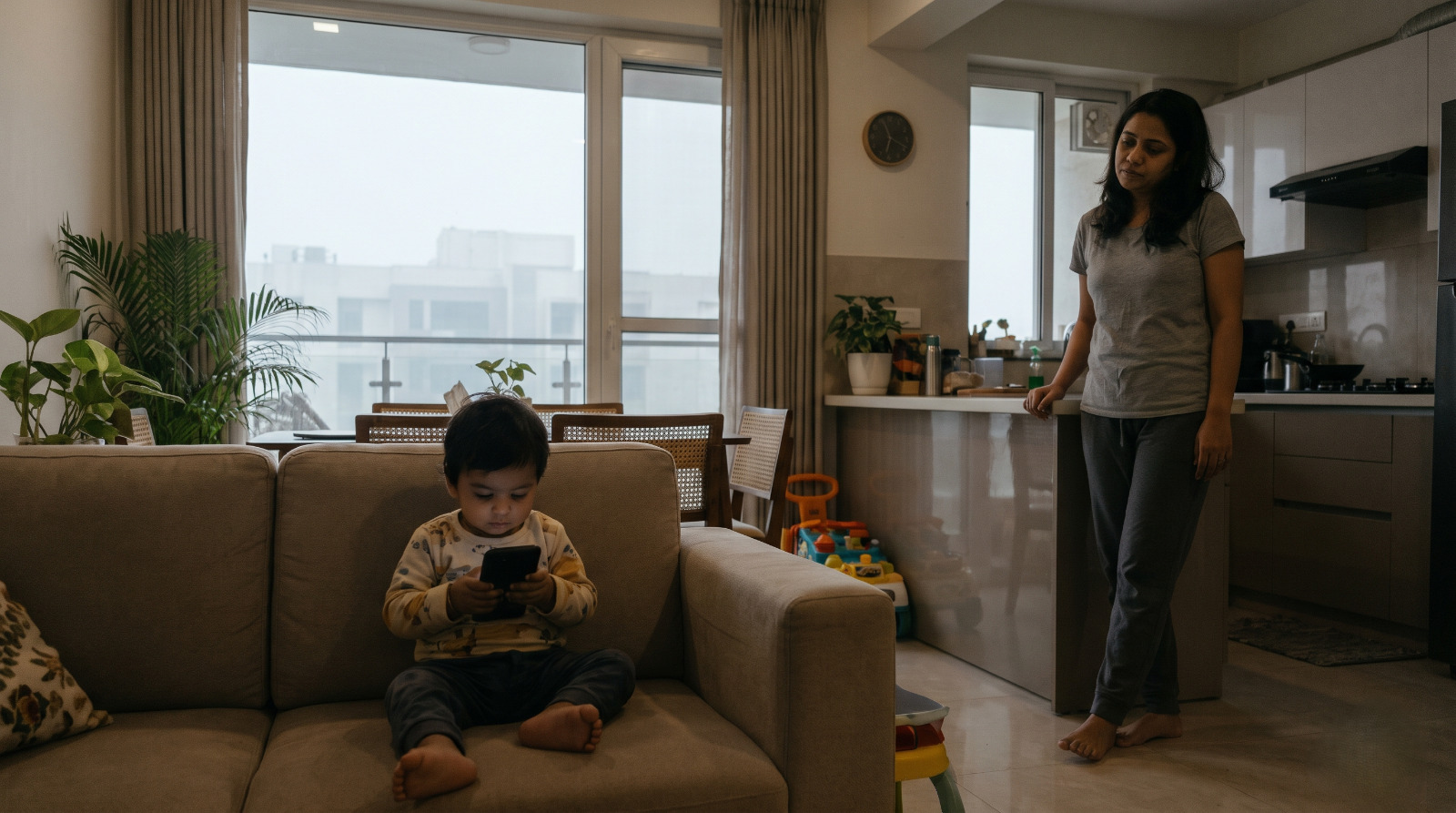
The windows are shut. The park has been empty all week. A toddler sits on the sofa with a phone, and a parent stands in the kitchen, tired, thinking, "Just for a little while."
If this is your November, you are not alone. When the air outside turns heavy, a screen can feel like the only way to get through the afternoon. There's no need for guilt about that.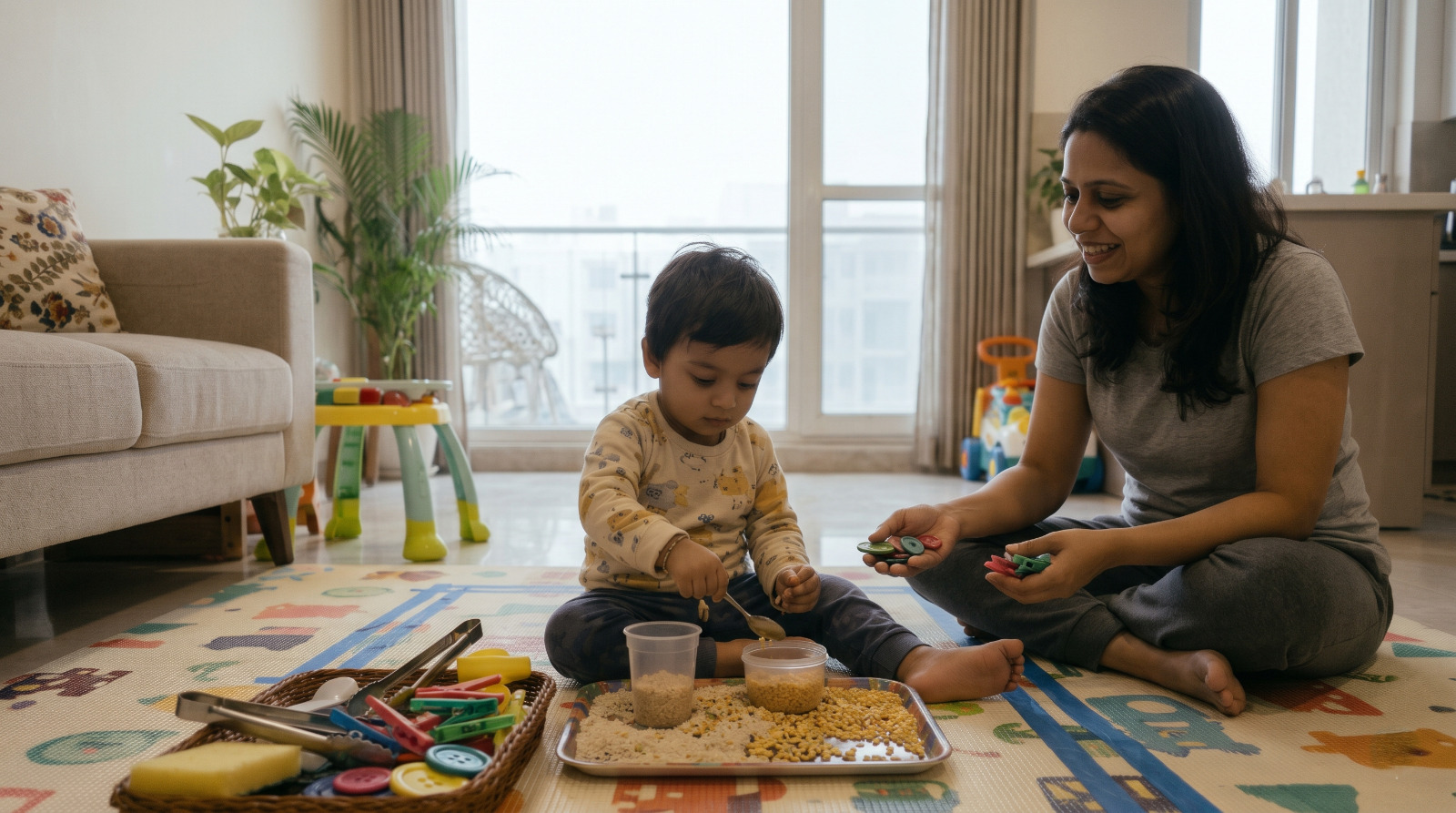
But it helps to know what a screen can't give. It has one flat surface, and a swipe feels the same every time. The real world has hundreds of textures: wet, rough, heavy, squishy, sticky, cold. Little hands learn by touching, pouring, pinching and squeezing, and that kind of learning is hard to replace.
The fix doesn't have to be a ban. Try a busy hands basket. Fill it with tongs, clothes pegs, big buttons, a sponge, and a tray with rice or dal and a couple of cups. Stick tape on the floor to make a road for toy cars. Keep the basket out of reach and bring it out only on indoor days, so it feels special.
Let a hands-on activity come first, and screen time after, with a clear stopping point like "when this song ends." And try not to use the screen as the only way to calm a child, or switch it off with nothing to replace it. On the hardest days, go easy on yourself.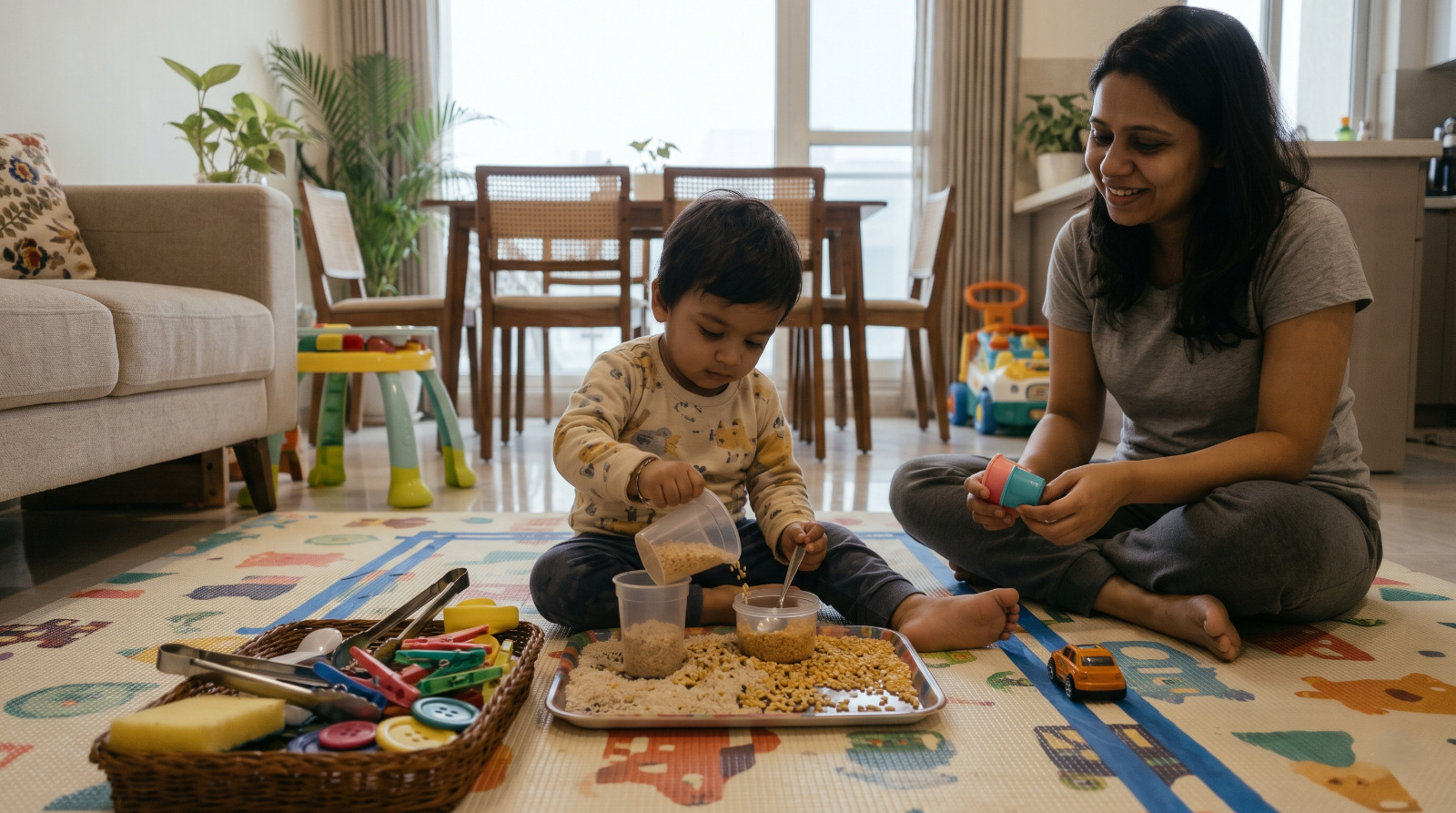
Teachers in early years classrooms know that learning starts with the senses. Children who spend time pouring, squeezing and feeling things often settle faster and stay with an activity longer.
A screen can fill an afternoon. So can a bowl of rice and two cups. Your child will remember the second one very differently.