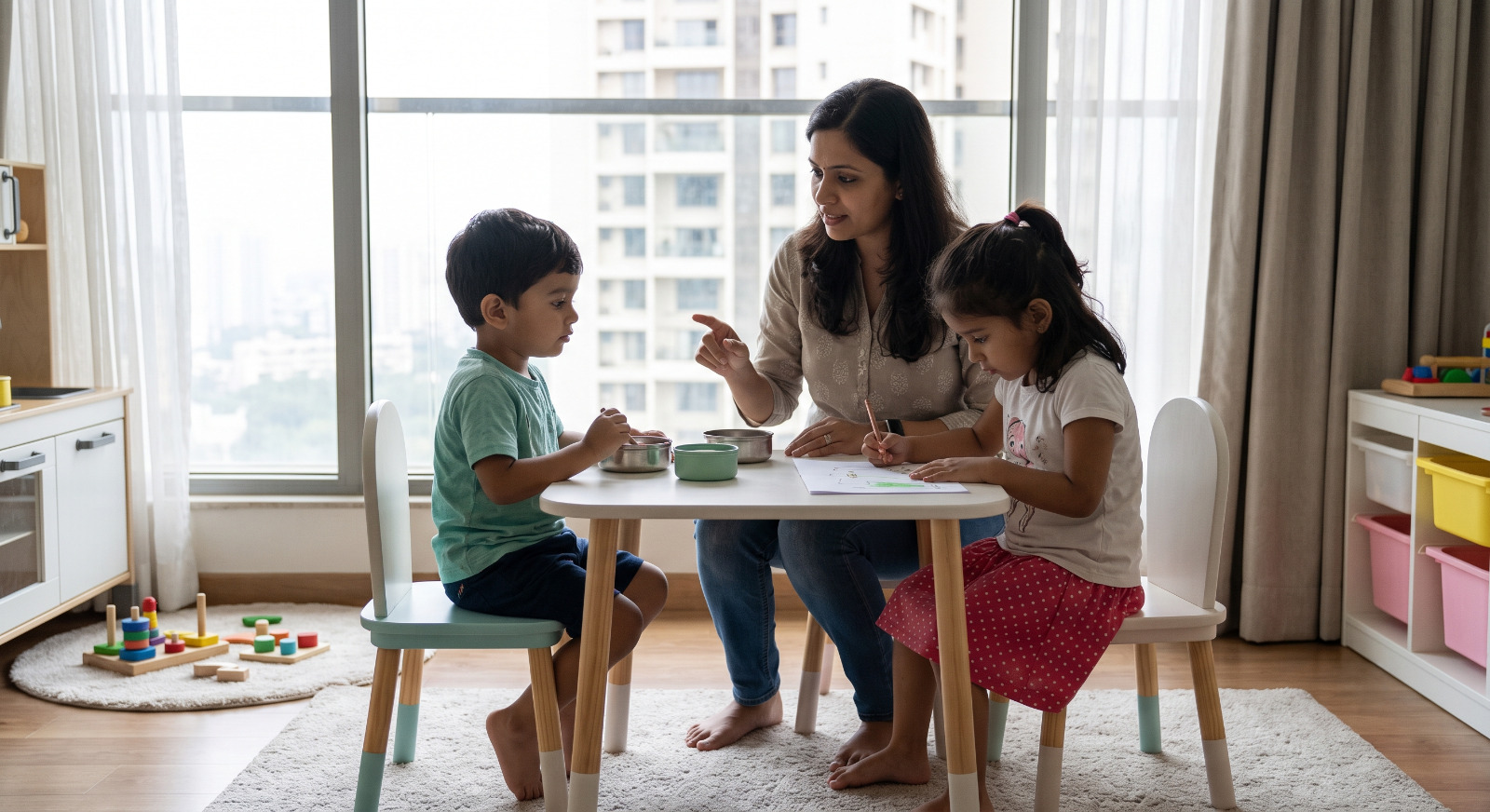
"Why can't you sit like her?"
"He finished his tiffin. Why haven’t you?"
"Look how well she’s drawing—try doing it like that.."
We've all said something like this, usually without thinking twice. But to a child, every comparison lands the same way: I'm not enough as I am.
Children don’t grow at the same pace, and they were never meant to grow at the same pace. One child speaks in full sentences at two; another is still finding words at three but can build a tower taller than themselves. One child reads early; another notices things in nature no one else does. None of this makes one child "ahead" and another "behind." It just makes them different.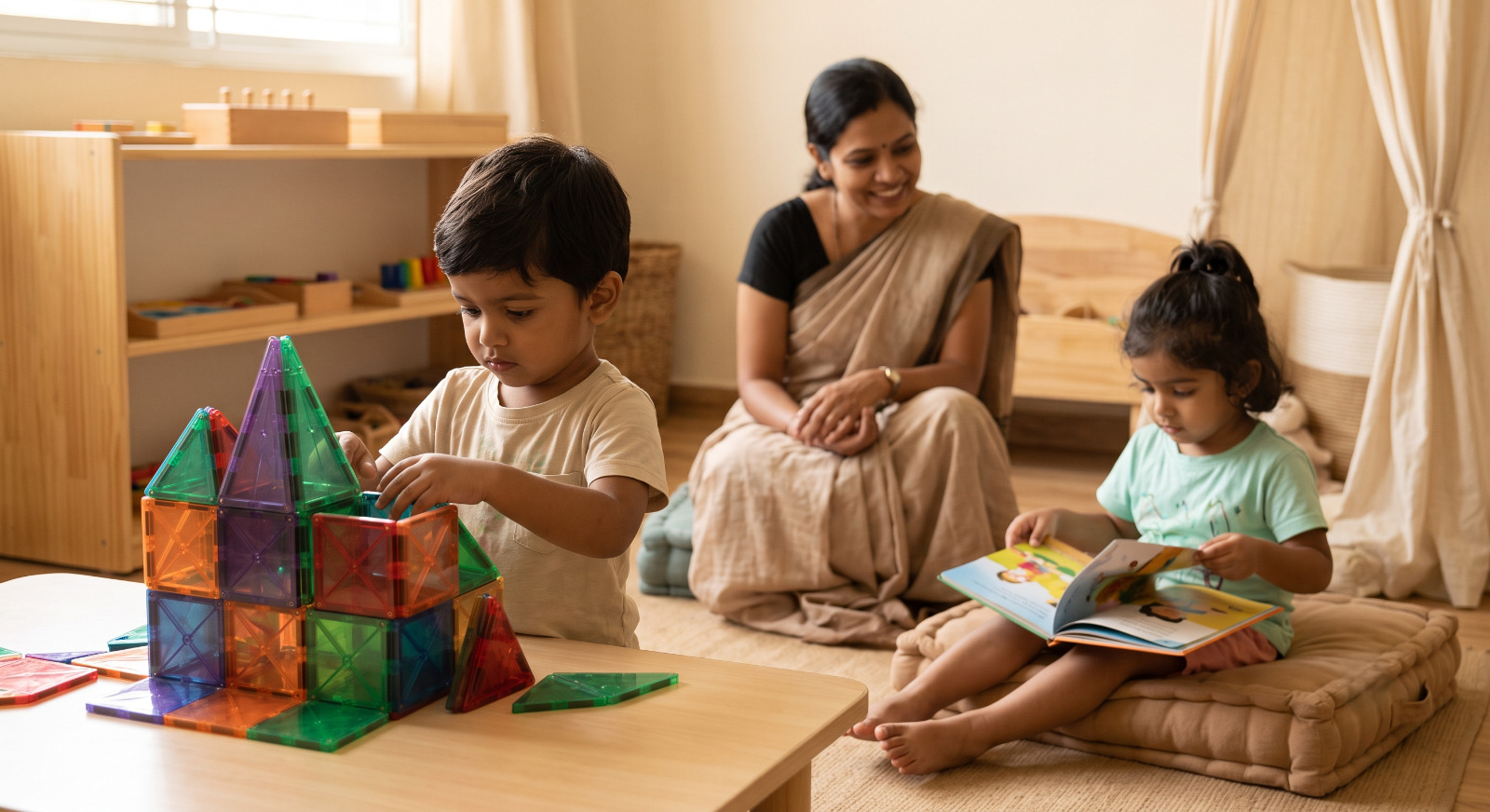
The trouble with comparison isn't just that it stings in the moment. It teaches children to measure their worth against someone else, instead of against their own growth; Over time that habit doesn't disappear. It just gets carried into school, friendships, and eventually adulthood.
The alternative is simple, but it takes practice; notice a child's progress on their timeline. "You couldn’t hold the pencil like this last month—look at you now," says so much more than any comparison ever could.
It's why our classrooms are built around the idea that every child has their own mix of strengths – no two children are meant to shine in the same way, at the same time.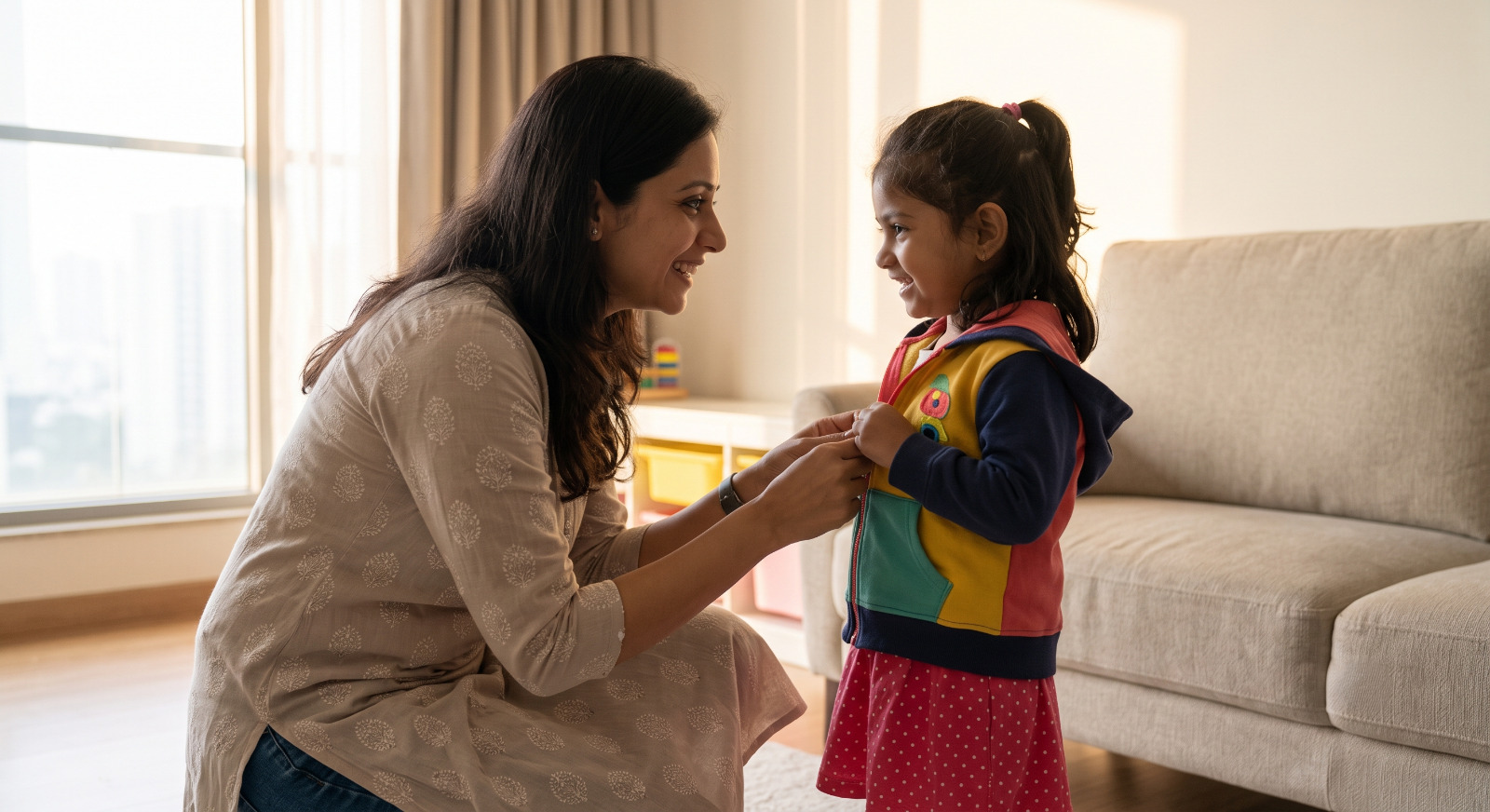
The next time the comparison is on the tip of your tongue, try this instead: notice what's different about your child, and say it out loud like it's a good thing... Because it is!