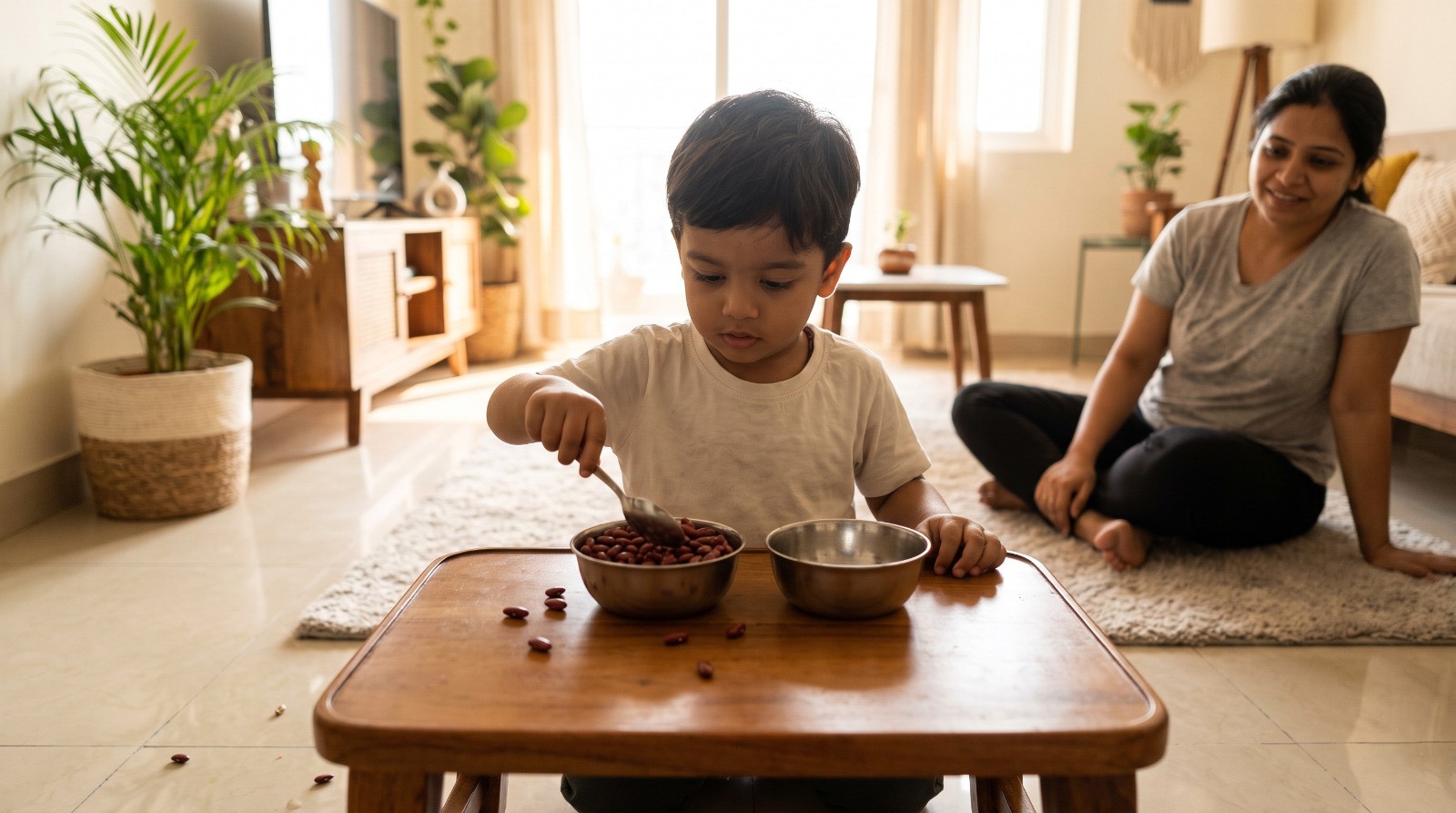
A child sits at a small table with two bowls and a spoon. One bowl is full of rajma. Slowly, carefully, one spoonful at a time, the beans travel to the other bowl. A few fall on the floor. The child picks them up and keeps going.
To a busy parent, it can look like nothing. A game to pass the time before the real learning begins.
But look closer. The child is learning one-to-one correspondence, the first step of counting. They are learning more and less, full and empty. Their fingers are building the grip they will need for holding a pencil. And they are practising something no worksheet can teach: staying with a task, even when beans fall.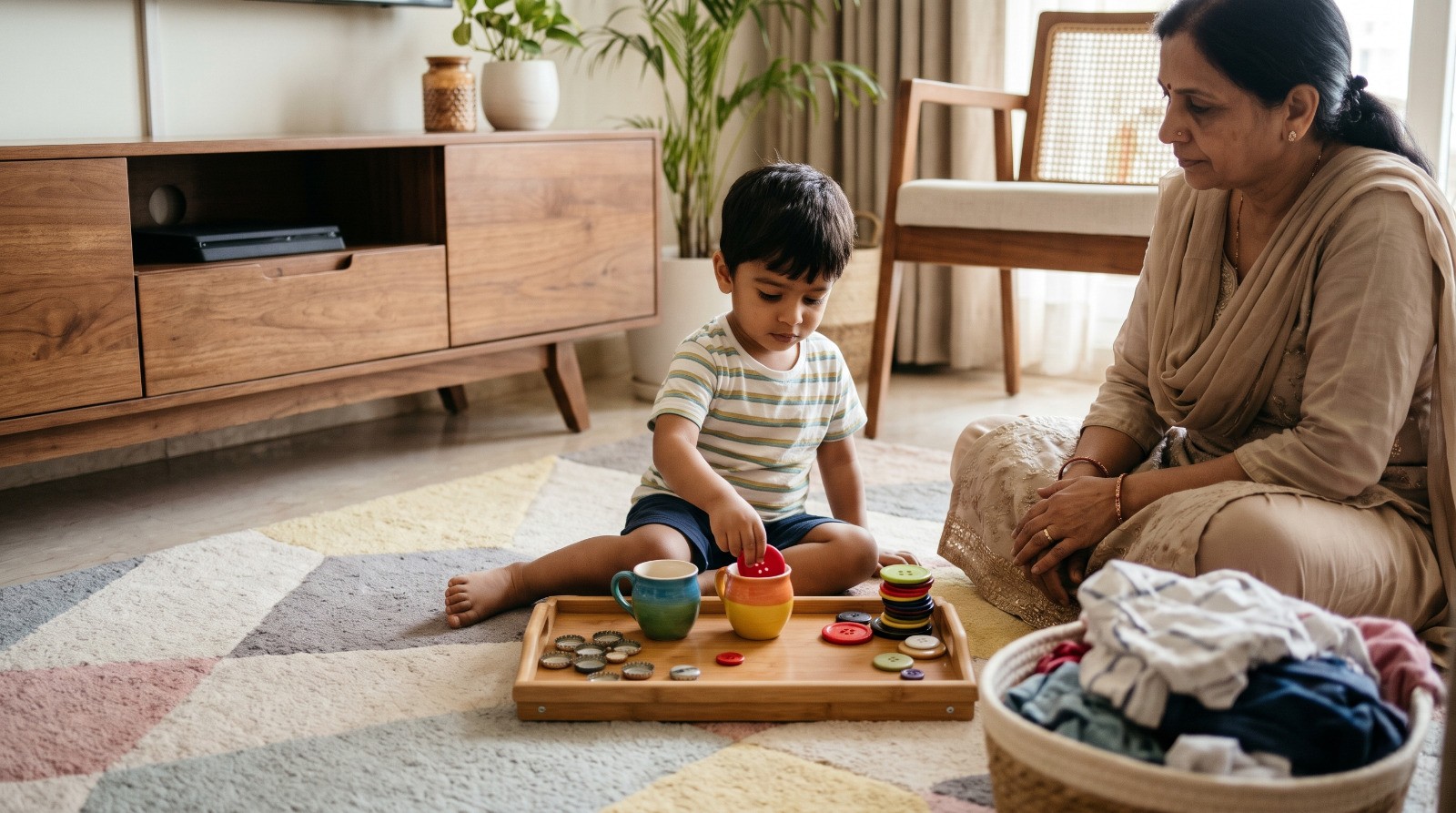
Sorting is the same. Putting red buttons in one cup and blue in another is the beginning of logical thinking. Pouring water between two cups teaches how much a cup holds. Matching socks while folding laundry teaches pairs. A walk barefoot over grass, a mat and sand teaches the feet and the brain to notice differences.
You can try all of this at home with things from the kitchen. Two bowls and a spoon. A cup of water. A basket of laundry. A few minutes is enough.
What not to do is just as important. Don't turn it into a quiz with "How many? What colour?" Don't correct how they hold the spoon. And don't take over when something spills. The spill is part of the lesson.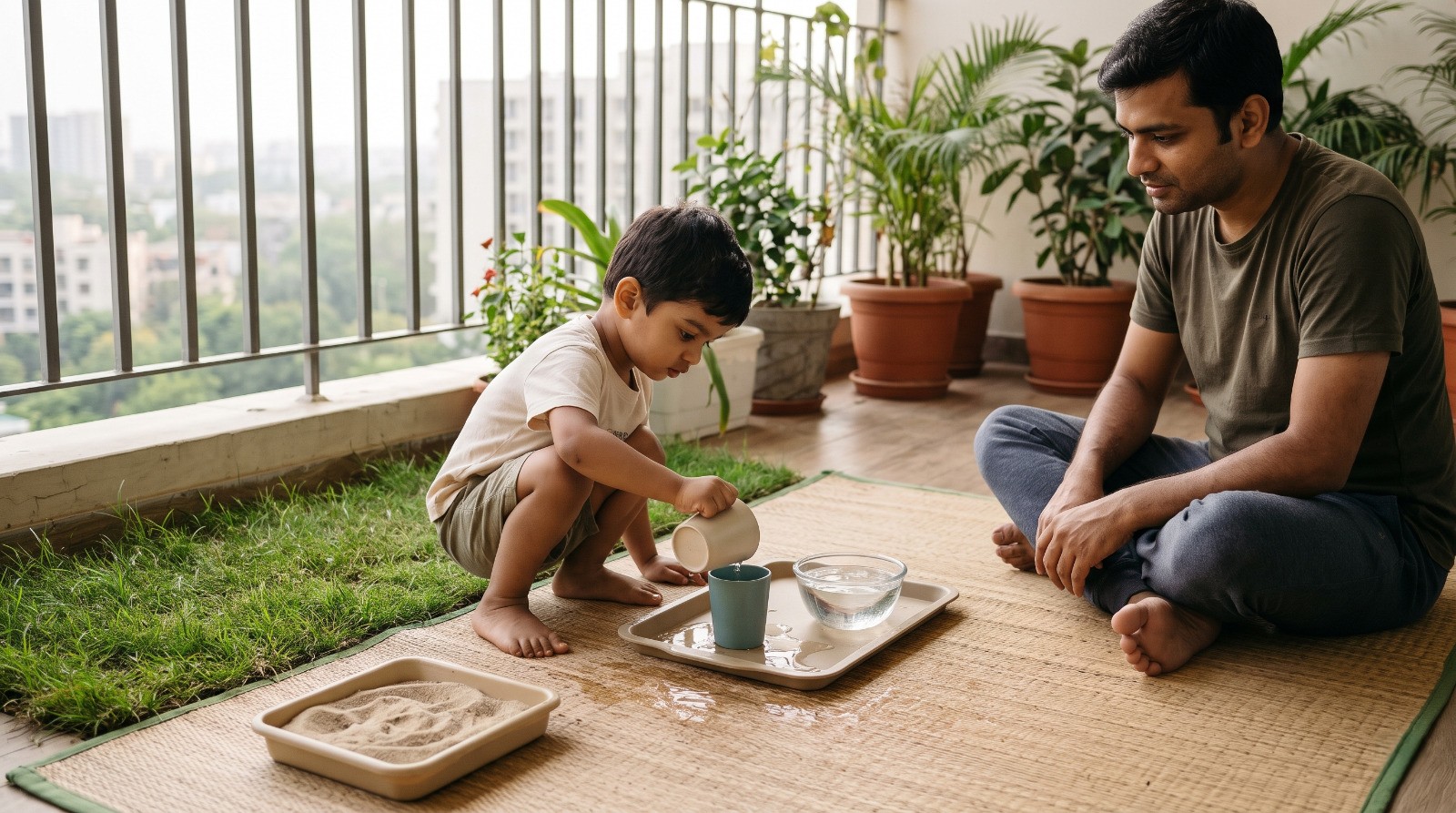
Teachers set up trays like this every day in early years classrooms, and they see it often. A child who couldn't sit still for two minutes at circle time will sit for ten minutes with a bowl of beans.
No flashcard can teach what a spoonful of beans can.