
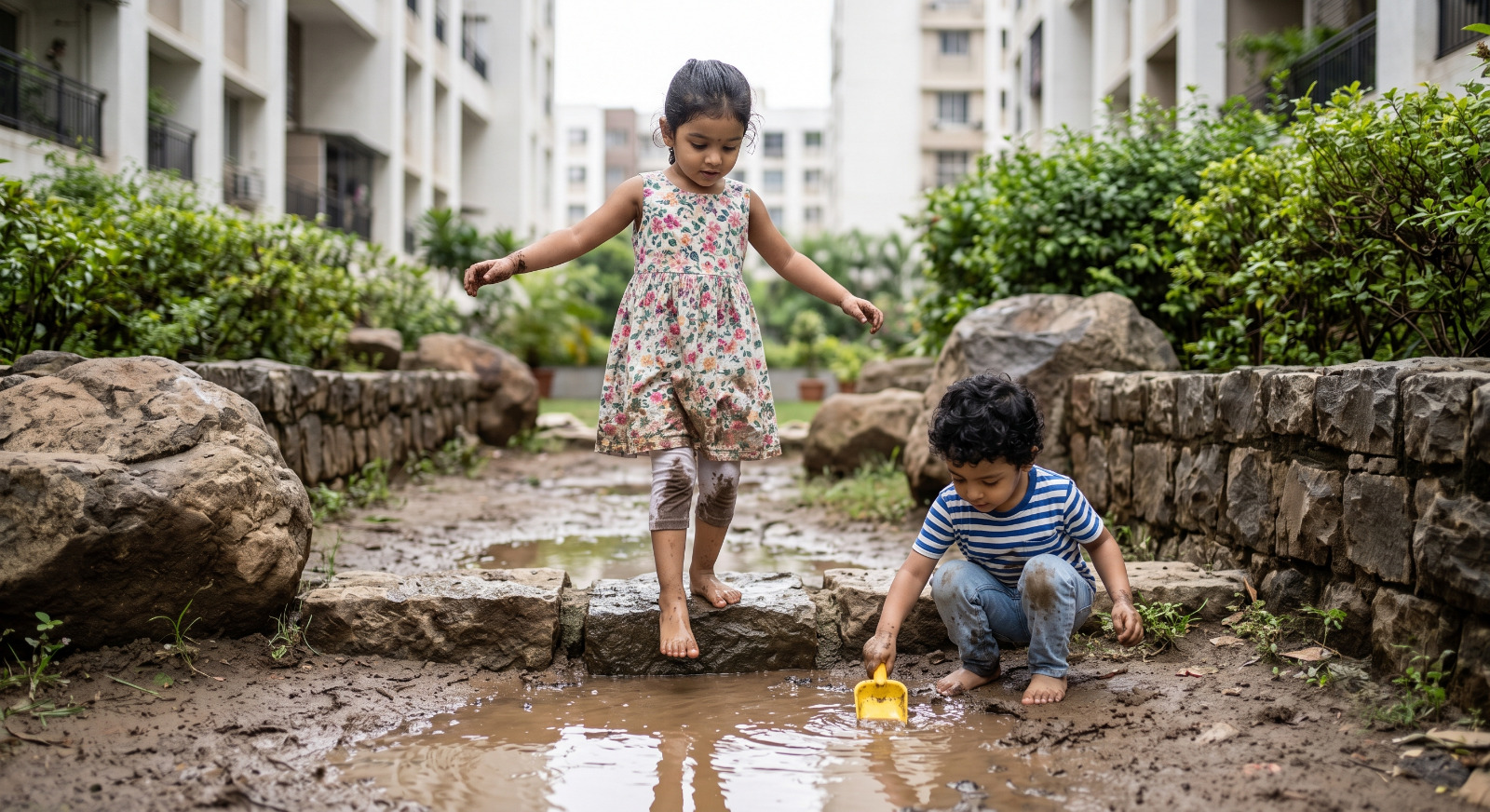
Hand a child a screen, and they'll sit quietly for an hour. Hand them a patch of mud, and they'll come back to you an entirely different child – muddier, louder, somehow calmer inside.
Outdoor play doesn't get the credit it deserves. It's seen as "just running around," something to fit in after the real learning is done. But for a young child, a backyard or a stretch of uneven grass does more for their development than most structured toys ever could.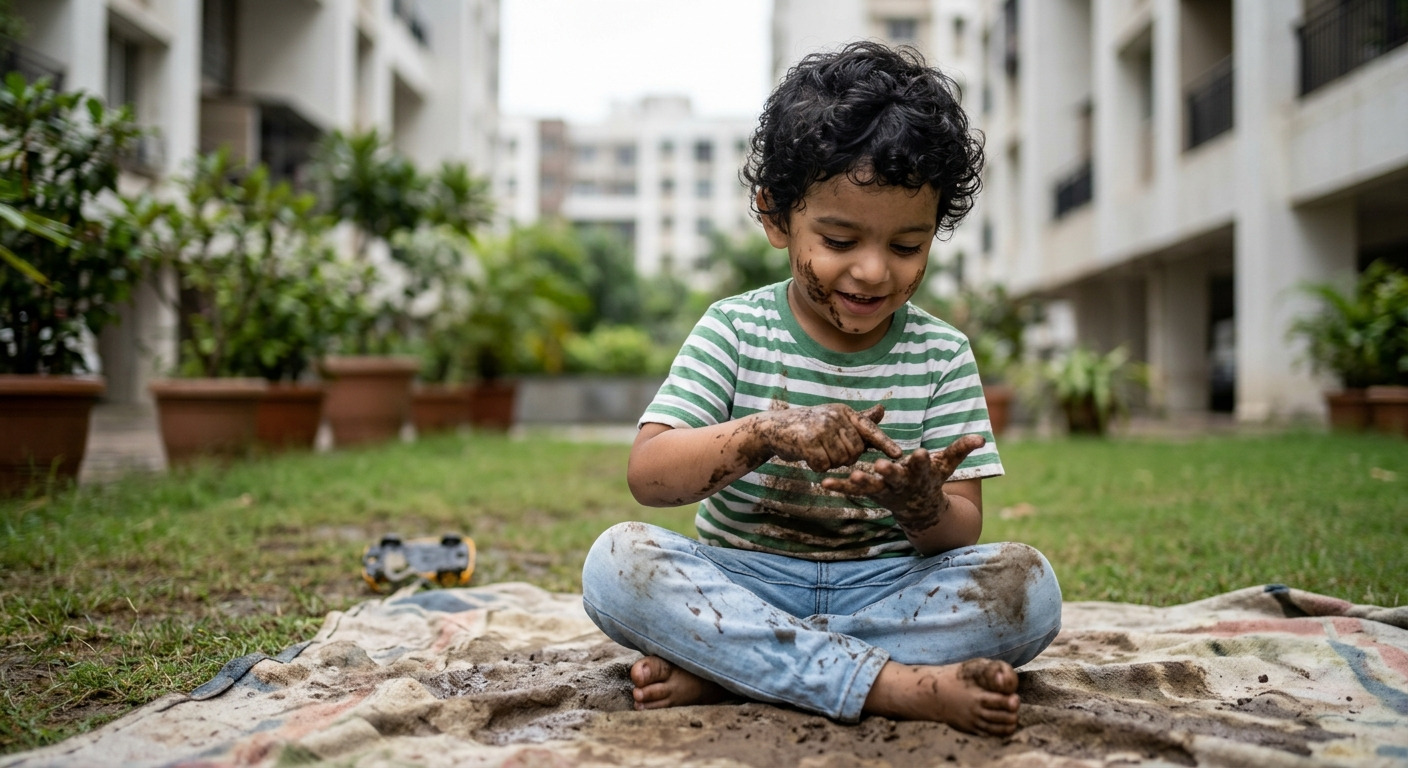
Climbing teaches risk-judgment. Puddles build balance. Digging in mud is a full sensory experience touch, smell, sight, all at once. And free outdoor play, with no rules and no "right way," gives children something rare: time where no adult is directing what happens next.
It doesn't need to be elaborate. A patch of soil, a few stones, a puddle after the rain – a child's imagination does the rest.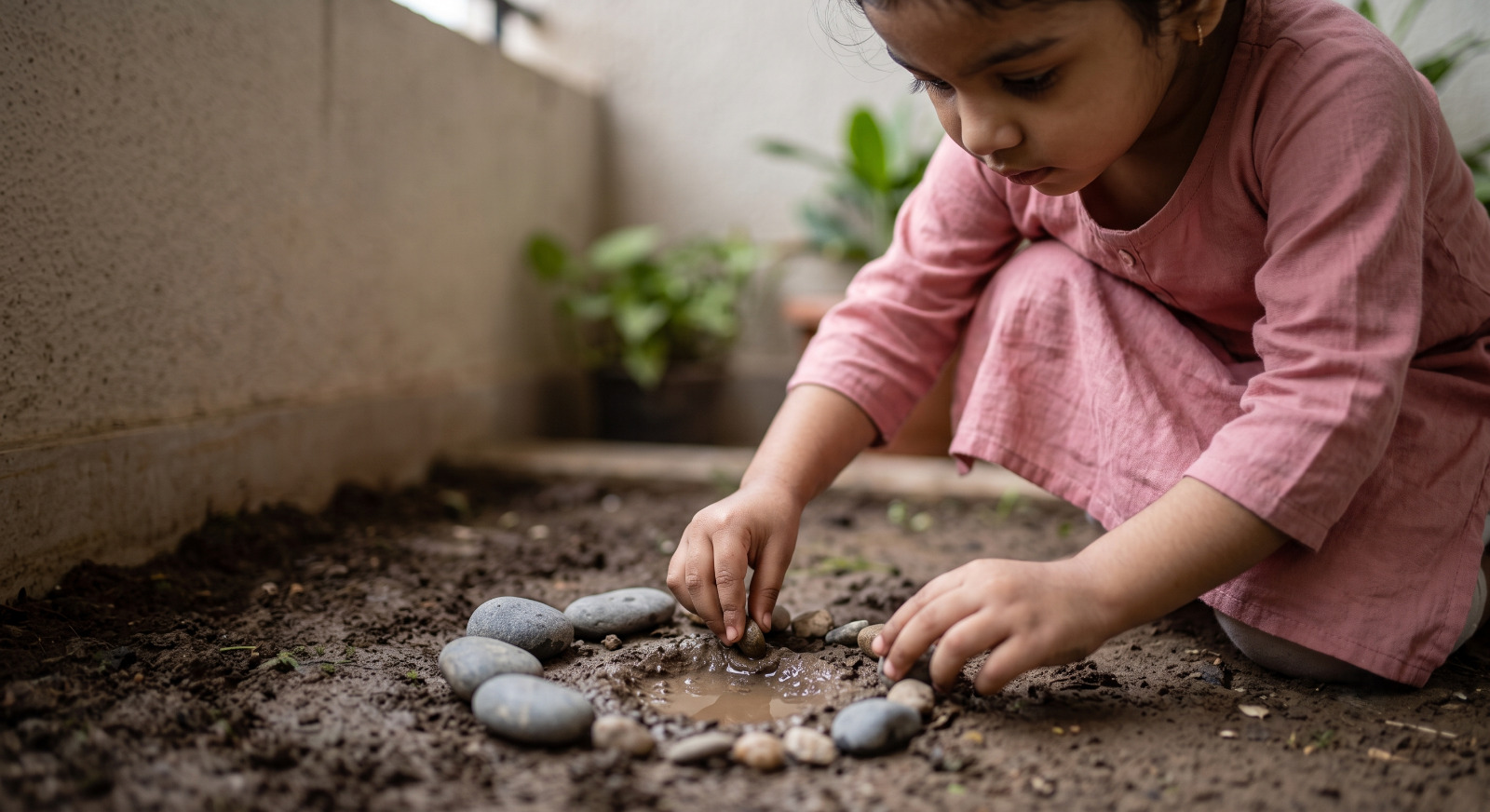
Outdoor play on natural, uneven surfaces is part of our everyday routine because children who play outside regularly focus better indoors, sleep better at night, and handle small frustrations with more ease.
So next time you're choosing between one more indoor toy and a walk outside, choose outside. Let them get a little dirty.
That mud on their hands is a lesson no worksheet can teach.